
ChatGPT AI now outperforms traditional customer support in corporations. AI enables 24/7 support, handles multiple customer interactions, provides faster and consistent responses, and generally makes customer service more efficient.
Providing exceptional customer support is critical to business success. When you solve customer problems satisfactorily, they return for more purchases and can even become advocates for your business. Ultimately, good customer service helps you retain customers and attract new ones to increase your revenue.
The question is, what approach will help you provide excellent customer service? Should you continue with traditional customer service or switch to AI-powered support operations?
This article will help you make an informed decision by examining the limitations of traditional customer service and how AI is changing the face of support services.
At the end of this blog, you’ll learn how to use ChatGPT AI to improve support operations, improve customer satisfaction, and drive business growth.
What are the limitations of traditional customer support?
Traditional customer support (which involves interacting with customers face-to-face, on the phone, or via email) has many limitations, which include:
Cannot manage multiple customer queries simultaneously
Customer service agents handle multiple support requests one at a time. It’s impossible to talk to two or more people simultaneously in face-to-face interactions or over the phone. Agents who somehow manage it notice a drop in service quality.
The inability to manage multiple customer queries simultaneously also causes queries to pile up quickly.
Long waiting times
Traditional customer service can waste customers' time as they wait in a queue to be attended to by a human agent.
90% of customers rate “immediate response” as important or very important when they have a customer service question. So, waiting for needed help can lead to a frustrating customer experience.
Can result in ineffective support
The success of the traditional support system highly depends on the skill of the customer support agents.
Since human agents have different skill levels, they often provide inconsistent responses. Also, some support agents may be unable to relate with customers effectively or provide individualised solutions - thereby providing ineffective support and failing to meet customer expectations.
Not available around the clock
Traditional support services usually come with limited working hours.
It’s expensive (and sometimes impractical) to make traditional systems for customer service available around the clock. So many companies adopting these provide customer support only during regular business hours. This usually frustrates customers who need help during off hours.
How is AI changing the face of traditional customer service?
Artificial intelligence (AI) has revolutionised the customer service industry by offering new ways to improve support operations. Forbes reports that AI technologies can potentially increase productivity by 40% or more by 2035.
How can AI improve the customer experience?
AI helps organizations overcome the limitations of traditional customer service. Thus, AI improves the customer experience by offering benefits that include:
-
Instant responses to customer inquiries. Customers no longer have to wait to get help.
-
Consistent responses. Customers will be confident about the solutions you offer.
-
Personalized responses. Customers will feel valued that responses are tailored to their individual preferences and needs.
-
24/7 availability. Customers can be sure of finding help whenever they need it.
Will AI replace human customer service?
While AI automates many of the repetitive tasks human agents do, the technology is not meant to replace human customer service completely.
In fact, businesses that successfully find the right balance between human and artificial intelligence enjoy the greatest increases in productivity.
Artificial intelligence can be used to tackle repetitive tasks, leaving human agents with more time to focus on complex or high-priority tasks that require emotional intelligence, ultimately increasing overall productivity.
How to use ChatGPT AI in customer service
Given its advanced conversational capabilities, ChatGPT is arguably the most advanced chatbot. It uses deep learning techniques to generate coherent, contextually relevant responses in a human-like conversational manner.
You may also like: Unveiling the Power of ChatGPT: Unlocking Next-level Conversations
Thus, organisations wanting to improve support operations use a customer service chatbot powered by ChatGPT. Some ways to use ChatGPT in customer service include:
-
Provide automated responses to common customer queries. ChatGPT can handle frequently asked questions by providing instant and accurate responses that satisfy customer inquiries. The model can pull up information from your database to respond to common questions about products, services, pricing, shipping, etc.
-
Reply to customer complaints. ChatGPT AI can generate relevant human-like responses to address customer grievances. For example, if a customer complains about a late order, the chatbot can provide a standard response (acknowledge the customer’s frustration, apologize for the delay, and provide an estimated delivery date).
What are the limitations of ChatGPT-driven customer service?
While ChatGPT has been a game changer in customer service, using the tool has limitations.
-
Still requires customer intervention. ChatGPT may not understand certain nuanced customer inquiries and will still require human intervention to resolve such complex issues.
-
Limited personalization. ChatGPT’s personalisation still does not compare to that of skilled support agents, which may lead to a less satisfactory customer experience.
-
Lack of empathy. ChatGPT does not have emotions and cannot empathise with customers, which may lead to a less satisfactory customer experience.
ChatGPT AI vs traditional customer support, which is better?
ChatGPT AI outshines traditional support services in leaps and bounds.
Unlike traditional systems, ChatGPT customer service chatbot would be available to people 24/7, allowing you to serve your customers whenever they need help.
ChatGPT uses natural language processing and machine language to understand context, interpret user queries and provide accurate and relevant responses even in complex scenarios. It can handle multiple queries simultaneously and respond quickly to customer inquiries while providing consistent responses.
Thus, ChatGPT offers faster and more efficient resolution, leading to improved customer satisfaction.
To enhance your ChatGPT skill, sign up for a comprehensive ChatGPT course.
Successful AI Implementations in Corporations
Some notable examples of successful AI implementation in corporations are:
Case Study 1: Company A - Enhancing Customer Satisfaction with ChatGPT
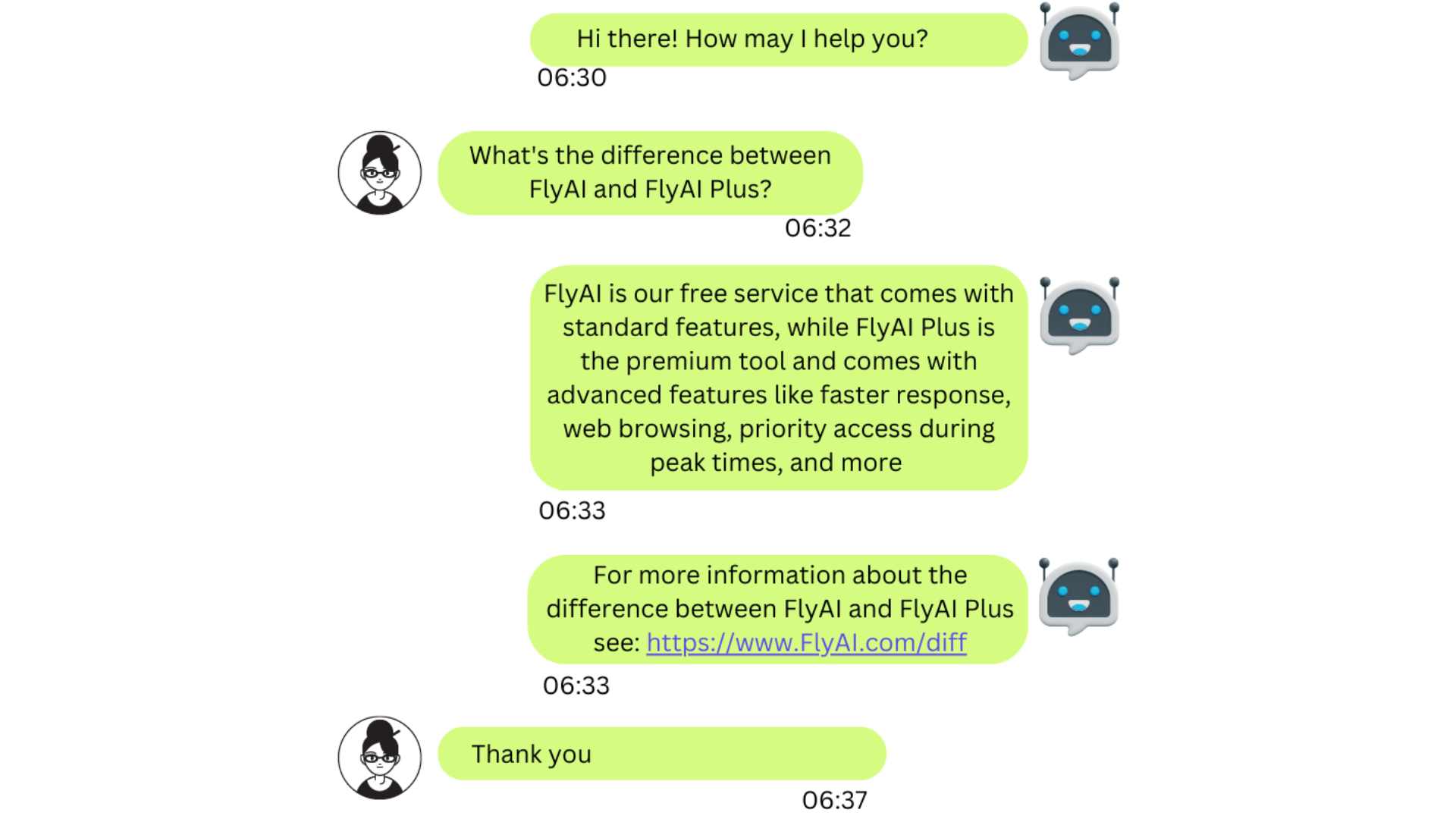
Company A uses ChatGPT chatbots to provide autonomous support, independently managing customer inquiries and providing instant, accurate answers. Getting instant responses instead of waiting long for human support improves the customer experience.
When a customer asks about the difference between two versions of the company’s product, the chatbot can fetch the information from the database, provide an accurate answer, and even refer the customer to other resources for more information.
Case Study 2: Company B - Streamlining Customer Support with AI Chatbot
Company B uses ChatGPT chatbot to streamline support service by welcoming customers, interacting with them to determine their issues, and then connecting them to human agents best suited to handle their specific issues.
By connecting the customers to agents specializing in addressing their specific problems, the customers are more likely to get accurate responses for effective resolution.
Consider how the chatbot helps a customer with service cut-off issues.
Benefits of using AI in customer support
Deploying AI in customer support offers many benefits, including:
Improved Efficiency and 24/7 Availability
AI enables 24/7 support service. No matter the time of the day or the day of the week, AI-powered chatbots can attend to customers’ inquiries. This also helps you meet the needs of customers in different time zones.
Chatbots also provide customers with immediate answers, reducing wait times and improving the efficiency of your support service.
Personalization and Enhanced Customer Experience
AI chatbots (like ChatGPT) can be trained to deliver personalised responses. The model analyses past conversions and customer data to understand individual customer preferences, allowing it to provide tailored responses. This leads to more engaging interactions that enhance the customer experience.
Cost Savings and Scalability
Using skilled human support workers is more expensive than using a good balance of AI and humans. Thus, deploying AI can significantly reduce the cost of your support operation.
Also, AI can handle a large volume of customer inquiries, so you don't have to proportionately expand the number of your support team to accommodate a growing customer base.
Multilingual support
AI models (like ChatGPT) can provide support in different languages, which helps you eliminate language barriers when catering to a diverse customer base.
Challenges of using AI in customer support
While AI comes with many benefits, there are a few drawbacks. These include:
Limited Knowledge
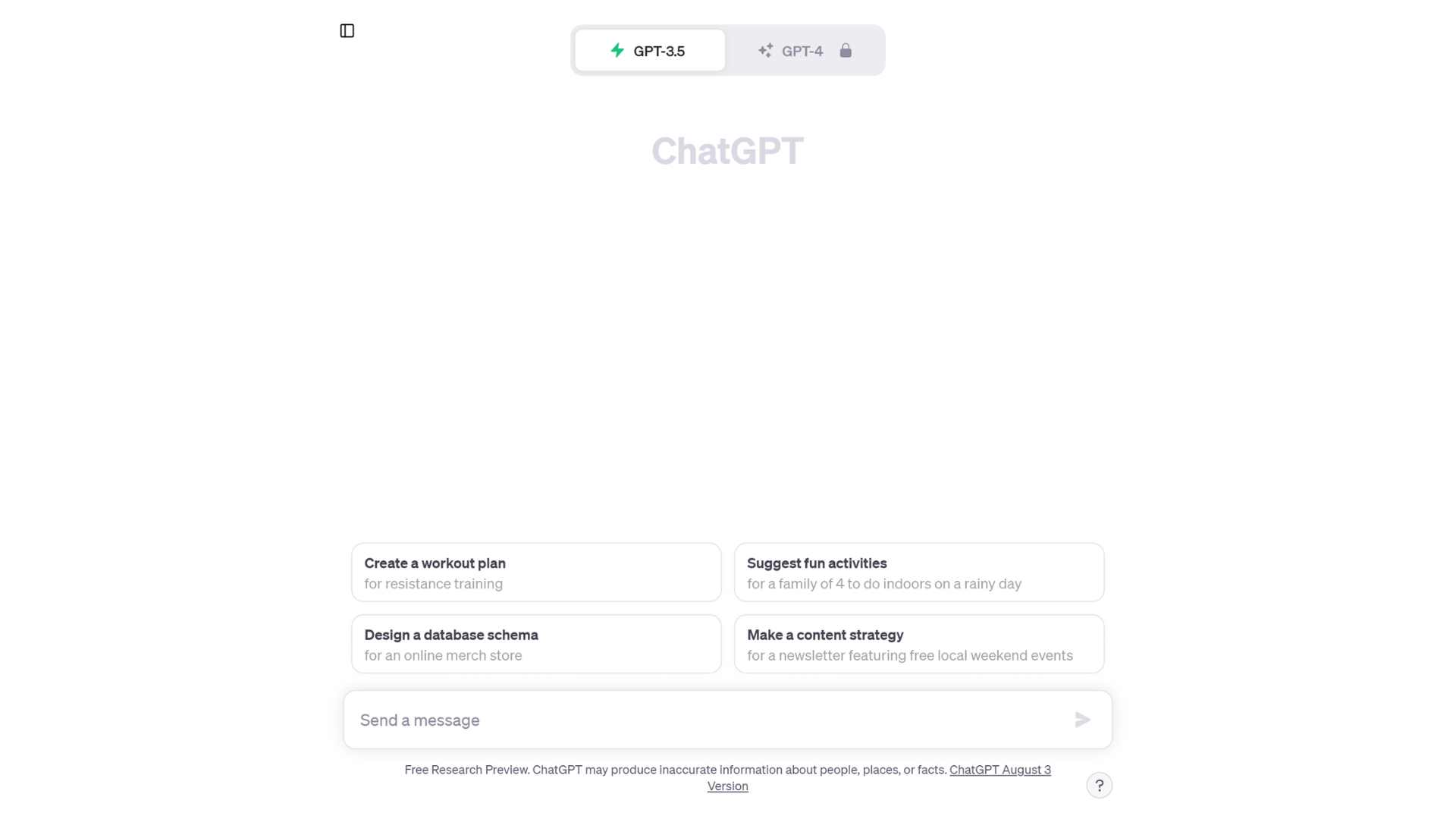
ChatGPT means Chat Generative Pre-trained Transformer, meaning it uses data it has been trained on to answer users’ questions. Thus, when you ask the AI model a question outside the scope of the data it is trained on, it will be unable to provide true insight.
Lacks human touch
AI cannot provide the same level of empathy and emotional intelligence as human support. Since empathetic responses may enhance user experience, many customers may still prefer to interact with human agents.
Limited text input
AI tools come with character limitations. For example, ChatPT has a limit of 2,048 characters per response.
This means that customers may reach their limit when they are vague or ramble on without making their point. The bot will only consider text within the character limits, so important context may be lost, resulting in accurate or irrelevant responses.
How to Navigate the Challenges of AI-driven Customer Support
Thankfully, you can take several steps to ensure your AI-powered support service delivers the best results possible. These steps include:
Pre-train ChatGPT with vast amounts of data for specific applications
Since ChatGPT only knows as much as pre-captured information, you should train it with vast amounts of data and test it with prompts before deploying it for full use.
Use a mix of human support and automation
Since chatbot technology lacks the emotional touch, leaving customer interactions to bots may frustrate some customers. So, finding a balance is best by providing automated responses to simple inquiries and leaving more complex issues to human agents.
Use different prompts to bypass character limits
If you reach the ChatGPT character limit, use prompts and follow-up questions to overcome it. You can use separate prompts to feed longer pieces of text into the ChatGPT AI as long as they are within the same conversation.
Takeaway: Improve your support operations with the most advanced AI yet - ChatGPT.
In the “AI-powered support vs traditional support” argument, AI is the clear winner for providing 24/7 availability, immediate response, consistent response, and more.
ChatGPT is the most advanced AI yet, making it the go-to tool for using AI technology to supercharge customer service. However, ChatGPT can only improve your support operations and drive business growth if you use it right - hence the need to take ChatGPT courses.
ChatGPT courses will equip you with the skills needed to master the powerful AI-powered tool, so you can use it to provide faster and more efficient customer service leading to having happy and loyal customers.
Nexacu is Australia’s leading provider of ChatGPT courses. Our instructors will give you personalized attention and support to make sure you get the most out of your ChatGPT training.
Ready to master ChatGPT and streamline your operations to boost productivity? Sign up for one of the best ChatGPT courses today! Start with our Beginner course on your way to customer support success.